
2026 June Election Position Statements
Superior Court Judge Seat
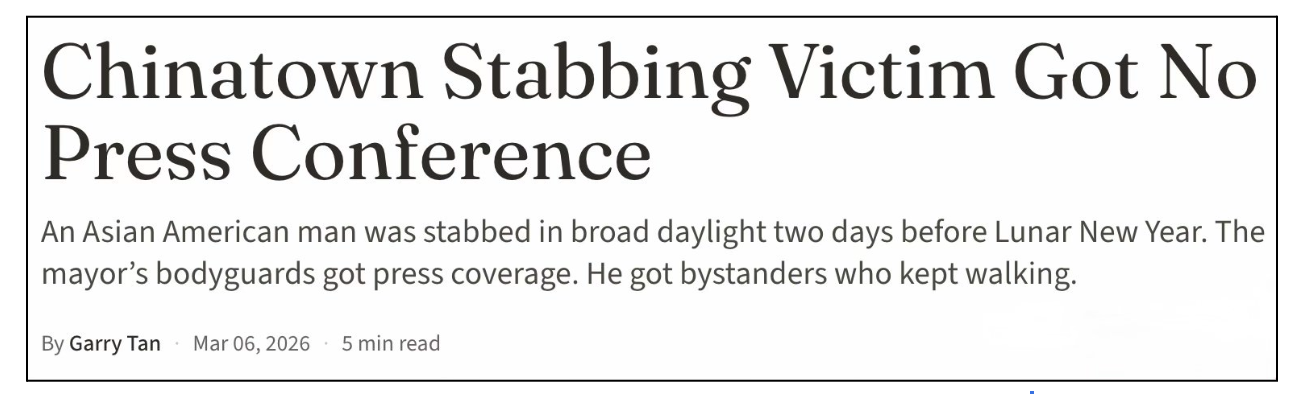
This seat on the Superior Court was vacated when Judge Gerardo Sandoval announced his retirement. Judgeship seats rarely open, and when they do, it would behoove us voters to pay attention and seize the opportunity to fill them with candidates who believe in accountability under the law. In 2024, SF voters had the opportunity to remove two of the most lenient Superior Court judges with abysmal track records who were known for allowing repeat dangerous offenders back out on the street. Sadly, we took a pass. We cannot continue to complain about public safety yet ignore opportunities to change the status quo. The article below highlights the devastating impact of recidivism and imposing lenient consequences or no consequences.
CSF Recommendation
Phoebe Maffei: Affirmative!
A former prosecutor who has experience as an Assistant District Attorney (ADA) in the San Francisco DA’s office, Phoebe Maffei has a deep knowledge of the law and a thorough understanding of San Francisco statutes, and she boasts a history of prosecuting crime on our streets. ADA Maffei demonstrates a well-rounded working expertise and an ability to balance all available legal pathways for those she prosecutes, including the appropriateness of diversion programs and incarceration. If we are going to be serious about public safety, then Phoebe is exactly the kind of commonsense, knowledgeable, practical judge we need to elect.
Alexandra Pray: We object!
Pray is a public defender currently serving as a Deputy Public Defender. Her work involves representing defendants in criminal cases, and typically focuses on protecting defendants' rights and fairness in the court process. With drug dealers and repeat offenders being cycled through a revolving door, thanks to activist judges, we do not see this candidate as the solution to that problem.
CSF Recommendation: Vote for Phoebe Maffei!
Board of Education Seat
CSF Recommendation
Phil Kim: Yes, indeed!
Phil Kim is a unicorn in the often-ignored, routinely-used-as-a-political-launching-pad world of SF Education Board politics. He actually knows what he's doing! During his 12 years as an educator, with a Master's in Education Policy and currently pursuing a doctorate, he had hands-on experience running programs inside SFUSD itself before ever sitting on the SF Ed Board. He was appointed by former mayor London Breed, was unanimously elected board president by his colleagues and immediately got to work on the unglamorous but essential stuff, like dragging SFUSD's fiscal certification up from "negative" to "qualified." (Do we dare even dream we might one day see it go “positive”?)
Under his watch, the board set operational standards for itself, adopted a new K through 8 math curriculum, set measurable goals for 3rd grade literacy and 8th grade math proficiency and established real accountability metrics for the superintendent for the first time in years. This is not a guy simply treating the SF School Board as a résumé line item on his way to something else. What a relief!
Brandee Marckmann: Never!
Brandee Marckmann's relevant experience is that of a parent-activist, not a disqualifier in itself, except for her choice of causes. She was a vocal defender of the recalled school board members who prioritized renaming schools over, you know, actually reopening them during Covid, so kids could attend school. She represents a return to exactly the governance culture San Francisco voters resoundingly rejected in 2022: identity-driven curriculum fights, hostility to accountability and combative politics that put adult ideology ahead of student outcomes. These are the same politics that produced a $114 million deficit and a payroll system that couldn't accurately pay its own teachers. Her refusal to engage with the SF Parents Action's endorsement process is itself telling. So is her circulation of a conspiratorial "spider web" graphic smearing other parents and claiming they were part of a right-wing plot. It’s clear Marckmann does not possess the collaborative temperament needed to engage a complex and diverse network of parents, families, teachers and administrators.
Virginia Cheung: Not this time
A late entrant in this race, Virginia Cheung is the teachers’ union's chosen candidate to challenge Phil Kim in June, and we can expect her to run again in November for one of three open SF School Board seats. The unions have long wielded outsized influence over the school board, making it nearly impossible for moderate, fiscally-responsible candidates to break through, unless appointed by the mayor following a recall or resignation.
The consequences of union dominance and a “teachers first” approach to governance have been severe: fiscal mismanagement, damaging academic policies (the Algebra debacle, anyone?), a partial state takeover and families fleeing both the school system and the city itself for more education-driven, “children first” pastures.
Cheung claims to support a "pragmatic, data-driven approach to budgeting that puts classroom excellence as its top priority." But don't be fooled. There is little reason to believe she would be permitted to act on that vision in any meaningful way. The union went searching for a June challenger after Phil Kim declined to join them on the picket line in February, and Virginia will march in lockstep with the United Educators of San Francisco every step of the way.
There is so much work to be done to give SFUSD students and families the school district they deserve. Phil is the Obi-Wan Kenobi of the SF Education Board and is our only hope to lead SFUSD and the school board away from the dark side.
CSF Recommendation: Vote for Phil Kim!
District 2 Board of Supervisors Race
CSF Recommendation
District 2 is no stranger to blessings with its stunning views of the SF Bay, a national park in its backyard and more vibrancy than it can handle! And this election season is bound to ensure this district enjoys at least two more years of that glory. Two supervisor candidates are running to fill the seat; both are hardworking, genuinely decent people who clearly care about the residents they hope to serve.
On most issues, there isn't much daylight between Lori Brooke and Stephen Sherrill. Both candidates prioritize fully staffing emergency services and police, holding offenders accountable, practical neighborhood problem-solving and supporting small businesses and San Francisco's economic vitality. All of their priorities resonate strongly with our ConnectedSF members.
Where the two candidates diverge most sharply is on the hotly contested question of upzoning and where new housing should be built.
Lori Brooke: Vote Yes
It is not an exaggeration to say that Lori Brooke has been working tirelessly on behalf of District 2 residents for 20-plus years. Her passion for helping San Franciscans is strong, and her connections with the community are deep. She is running as the neighborhood grassroots challenger, and her pitch is that District 2 needs an independent representative rooted in the district rather than another City Hall insider. Her North Star is neighborhood quality of life, and she has consistently framed safe and clean streets as the foundation for everything else.
Lori strongly opposed Mayor Lurie’s Family Zoning Plan, which was approved by the Board of Supervisors last December, though she doesn’t oppose building housing overall. Instead, she prioritizes neighborhood character and local control, favors building approved projects already in the pipeline and focuses on affordable housing. Lori strongly opposes the new Marina Safeway highrise project and broader upzoning tied to state mandates.
She is endorsed by respected moderates, like Michaela Alioto-Pier, as well as by the League of Pissed-Off Voters and the Working Families Party, universally known as a progressive, union-backed political party. Because Lori hasn’t held elected office, it’s an open question on how her progressive leanings on certain issues, not to mention her relationships with progressive leaders and groups, will factor into her decision-making if she is elected supervisor.
Stephen Sherrill: Close but not quite
Following a surprise appointment in 2024, when Catherine Stefani vacated the District 2 seat, Stephen Sherrill was appointed to fill the role. Stephen has worked diligently over the last year to foster relationships in the district, and he agrees with most of his constituents on public safety and increasing police staffing, arrests for drug dealing and public drug use, expanded use of law enforcement technology and stronger intervention tools for addicts on the streets, including conservatorships.
Stephen voted for the Family Zoning Plan, which he tried to moderate somewhat. He supports increased housing production across income levels and emphasizes meeting state housing requirements while maintaining some neighborhood input.
He is endorsed by SF YIMBY and all YIMBY-aligned politicians and entities, groups that have taken housing — an essential aspect of city planning and affordability — and packaged it as a street-closing, urbanist utopian vision, which has divided communities and left swathes of residents wondering why they are not part of the conversation.
Stephen has rolled seamlessly into the SF/CA political machine, and, unfortunately, that machine is everything we don’t like about politics: backscratching, mutual endorsements from all the merry-go-round politicians and, sometimes (in the case of Scott Wiener), laundering extreme ideological positions and passing them off as moderate or commonsense ideals. Despite the fact that Stephen disagrees with the scope of the Marina Safeway project, he is supported by the same group of electeds and activists who have given us the state mandates that led to it
ConnectedSF members are independent, pragmatic and not easily steamrolled, which may well explain why our survey results favored Lori. But the truth is, overall, both candidates offer much of what District 2 residents desire. The net-net? Voters are fortunate to have two candidates who will, likely, meet most of your district’s needs.
CSF Recommendation: Vote for Lori Brooke
District 4 Board of Supervisors Race
We are not big fans of ranked-choice voting, and in this race, it will be critical to get it right for your chosen candidate. But what we can say is that if you are a moderate and want the least progressive candidate to win, DO NOT RANK NATALIE GEE. If you want a true moderate, rank Albert Chow #1 and Alan Wong #2.
Quick Look:
Family Zoning Plan
Albert Chow: Opposed
Alan Wong: Supported
Natalie Gee: Opposed as written/Supports with amendments
Upper Great Highway
All three support the original compromise, allowing cars during the week, while closing the highway to cars on the weekend.
Albert Chow: Rank #1
Albert Chow is a long-time Sunset District resident and small business owner in San Francisco. He owns Great Wall Hardware on Taraval Street, a family-run store established in 1978 and has been active in the community for decades. Chow serves as president of People of Parkside Sunset (POPS), a neighborhood organization that hosts local events, such as movie nights and markets, and partners with residents and police on quality-of-life issues. Through POPS, he has emphasized community engagement and safety. His campaign highlights include a focus on safe streets, housing affordability and support for small businesses. If there is a candidate whose heart is in the right place, whose motives are pure and genuine, and who truly cares and understands his community, it’s Albert. Juggling the demands of City Hall as a small business owner, along with his strong commitment to family, Albert Chow concerns us only as we are a little worried that he has bitten off more than he can chew. But Albert is a homegrown candidate who our members overwhelmingly selected as their number one pick for D4 Supervisor. We would love to see him representing his District at City Hall. Rank #1.
Alan Wong: Rank #2
Alan Wong was appointed by Mayor Lurie last fall as the supervisor for District 4, following the recall of former supervisor Joel Engardio and the brief tenure of Beya Alcaraz. Wong is a lifelong resident of the Sunset District and a graduate of San Francisco public schools. Before his appointment, Wong served on the City College of San Francisco (CCSF) Board of Trustees, including two terms as board president, and worked as a legislative aide from 2019 to 2023 to longtime D4 supervisor Gordon Mar. While serving as CCSF Board President, the board resisted cost-cutting measures, favored union-aligned leadership choices and delayed and undermined financial reforms that could have helped stabilize the college’s finances. Alan is heavily backed and supported by a large number of unions, which means he will be beholden to a significant number of unions. While it doesn’t really make sense to us to vote for a guy who worked for the supervisor who D4 did not re-elect, he might be a marginally less progressive option than Natalie Gee. RANK #2
Natalie Gee: Do NOT Rank
Natalie Gee is a progressive community organizer and was chief of staff to Supervisor Shaman Walton. That should tell you all you need to know about why we cannot support her for D4 supervisor. Her extremely progressive platform includes supporting unions, opposing recalls and establishing a public bank, just to name a few of her ideological priorities. If you thought those were ideal, how about these: other more pie-in-the-sky priorities are progressive tax measures targeting high earners.
Her claim to fame is her community “activism,” which in politics usually translates into an inability to govern due to adherence to ideology over pragmatism. The Board of Supervisors does not need more activists. It needs stalwart soles who can do the boring work of legislating on behalf of all of us. Gee can continue her brand of progressive activism as Shaman Walton’s Chief of Staff.
District 11 Congressional Seat
Vote for Marie Hurabiell: Do so PROUDLY and LOUDLY!
CSF Recommendation
Marie Hurabiell: Yes, absolutely!
Marie Hurabiell is a multi-generation San Franciscan whose deep roots in the city have shaped her activism and civic leadership. Born and raised in San Francisco, Marie has spent decades engaging with local politics, the law and community affairs, first as a practicing attorney and later as a community organizer and civic advocate. Throughout her career, Marie has emphasized government accountability, neighborhood empowerment and citizen-led solutions to longstanding challenges facing the city.
Marie is a doer. Marie is best known as the founder and Executive Director of ConnectedSF, a civic engagement organization. ConnectedSF grew out of her observation that there was a growing disconnect between decisions being made at City Hall and the priorities of everyday San Franciscans, especially around issues like public safety, housing policy, government spending and other quality-of-life issues. By creating a centralized hub for civic participation and neighborhood coordination, she has worked to make engagement in local politics accessible, actionable and responsive to the real concerns of families and businesses.
Marie is a visionary. A key focus of Marie’s work has been articulating the concept of what some describe as city-caused problems: conditions that stem directly from policy choices, budget decisions or administrative actions by the city government that residents see as contributing to their deteriorating quality of life. This includes rising crime and public safety concerns, the city’s sprawling budget that appears misaligned with current demographic and economic realities and burdensome regulations that impact housing, transportation and neighborhood vibrancy. In her writing and public commentary, Marie has argued that many of these challenges are not inevitable but are instead the result of governance decisions that have not sufficiently centered around the needs and voices of residents. She’s called for a recalibration of priorities, so that public servants work for the people rather than being isolated in bureaucratic silos.
Marie is a community leader. Under her leadership, ConnectedSF has built a coalition of more than 13,000 neighbors across all 11 supervisorial districts, empowering hyper-local neighborhood groups to tackle issues directly and collectively. These groups operate as grassroots forums, where residents identify problems, mobilize around common goals and communicate directly with city officials. The result has been a more distributed model of civic activism, one that harnesses everyday experience rather than relying solely on top-down policymaking. ConnectedSF has supported community efforts on public safety initiatives, educational accountability and economic revitalization through events, campaigns, surveys and coordinated communications with local leaders.
Marie is a collaborator. In total, Marie Hurabiell’s contributions reflect a vision of San Francisco, where informed residents, empowered neighborhoods and accountable institutions work together to build a more functional and equitable city. Through ConnectedSF, she championed civic engagement as the cornerstone of effective urban governance.
Marie is a MODERATE. Let’s send this homegrown, pragmatic, problem-solving fighter for San Francisco to Washington and see how she shakes things up!
Vote for Marie Hurabiell
Scott Wiener: VOTENO. No More Excuses.
We strongly oppose sending Scott Wiener to Congress. California cannot afford to elevate a legislator whose record reflects ideological extremism over practical governance.
Since 2016, Wiener has authored dozens upon dozens of bills driven by knee-jerk reaction rather than careful, measured policymaking. Volume is not a virtue. Time and again, Wiener’s legislation prioritizes headlines over balance, sacrificing nuance and serious consideration of the unintended consequences. The result? Policies that frequently create new problems while claiming to solve old ones.
With each legislative session, Wiener’s positions have moved further from the mainstream. He does not govern as a moderate, and he consistently eschews the concerns of families, parents and public safety advocates in his district.
His record reveals a clear pattern: reducing criminal penalties, expanding drug decriminalization and advancing policies that many believe undermine protections for children, teens, women and neighborhoods. At the same time, he has declined to support legislation that would strengthen accountability and public safety.
This is not the leadership San Francisco and California need in Washington.We urge voters to examine his full legislative record carefully, not just the press releases. This article encapsulates many of the serious issues we have with Wiener’s legislative work. If anyone is wondering why we don’t consider him to be a “moderate,” this is why.
The stakes are too high to reward this candidate with a seat in the US Congress.
Below is a list of State Senate and Assembly bills that Wiener voted for and/or sponsored:
SB 57 (2021) Authorizes safe consumption sites.
SB 58 (2023) Decriminalizes certain psychedelics. (Vetoed by Governor Newsom.)
SB 73 (2021) Repeals key drug mandatory minimums. (Wiener also has supported broader sentencing reductions.)
SB 107 (2022) Makes California a sanctuary state for minors seeking gender-related medical interventions, limiting cooperation with out-of-state parental protections. (This has undermined parent’s rights and forced the state into deeply personal medical decisions involving children. It also has resulted in an increase in teen trafficking.)
SB132 (2020) Allows biological and intact males in women’s prisons, resulting in the rape of women inmates.
SB145 (2020) Pushes for “parity” in type of sex offense and allows for sex offenders to potentially avoid registry, if sex is with a minor within a 10-year age gap.
SB239 (2017) Changes knowingly transmitting HIV from a felony to a misdemeanor.
SB357 (2022) Decriminalizes loitering, protecting pimps and enabling sex trafficking. (Increased sex trafficking of women and teens makes it more difficult to protect victims.)
SB1414 (2024) Increases penalties for soliciting a minor for sex from a misdemeanor to a felony. (This may sound good, but the bill initially covered all minors up to age 17. Because Wiener did not support the original version, the final version now only protects minors up to 15 years of age, leaving soliciting sex from 16- and 17-year-olds a misdemeanor.)
AB1028 (2023) Supports ending mandated reporting of abuse towards women unless the abuse was with a gun. (Thankfully, this did not pass.)
The following are critical public safety bills introduced by other legislators that Wiener actively blocked. (None of them passed).
AB367 (2022) Failed to support sentencing enhancements for killing/harming by fentanyl.
AB955 (2022) Failed to support increasing penalties for fentanyl sales over social media.
AB1058 (2022) Voted against increasing penalties for possessing large quantities of fentanyl.
Wiener also backed Prop 47 (2014), which downgraded serious theft and drug crimes to misdemeanors, creating a wave of organized retail theft, drug abuse and criminals who walk free within hours of being arrested, giving them an opportunity to repeat the offense hours later. He then opposed Prop 36 (2024), which 70% of voters statewide passed to correct this public safety disaster.
As a state senator, Wiener is one of the most extreme legislators in California, doing his best to chip away at parental rights, erode women’s rights and support pro-crime legislation.
Connie Chan: Just NO.
We have never endorsed this progressive candidate, and we are not about to start now. This incumbent has a track record of ineffectiveness and unresponsiveness to the residents in her district. Chan opposed both the Board of Education and the Chesa Boudin recalls. Her anti-public safety stances include defunding and dismantling the SFPD, as well as voting for the premature re-appointment of an anti-law enforcement police commissioner. She is one of the progressive candidates on the SF Board of Supervisors who fails to prioritize public safety or the drug and homelessness crises, all while working diligently on behalf of the unions that support her. Chan would be an ineffective anti-public safety congresswoman bought and paid for by that select few. Once again (and we hope for the last time), we will not be endorsing her brand of union-owned, progressive incompetence.
Saikat Chakrabarti: Please NO.
This candidate for US Congress has a background in technology, policy and government operations and is just another guy who has become insanely wealthy yet pretends to be an “everyman.’ His policies, conversely, are far from any that benefit the “everyman.” It appears more to us like Chakrabarti has joined the haters of the wealthiest San Franciscans only after becoming wealthy himself. After benefiting from an era of opportunity, lower barriers to entrepreneurship, more flexible markets and unhindered pathways to build wealth, he now advocates for regulations, taxes or restrictions to close the same doors that were open to him. “Yes for me, but not for thee” seems to be the theme of these multi-millionaire candidates, and it is a worrisome philosophy by any objective standard.
As if that was not enough of a turn-off, from what we can unearth, Chakrabarti has only been living in San Francisco full-time since 2019; his primary residence is in Maryland. We are skeptical that anyone living here for this short amount of time can genuinely and effectively represent San Francisco (CA-11) voters.
His experience working for AOC seems like an incongruous fit for a “Nancy Pelosi” town. City Journal called him a “progressive on a mission,” and that mission includes abolishing ICE, supporting a billionaire tax and national public banks, imposing aggressive federal strategies for housing and health care and promoting structural shifts in democratic representation, all of which are rooted in progressive policy circles, not grounded in political or fiscal realities.
Chakrabarti is, impossibly, even more progressive than Chan. So, if you’re looking for a Bernie Sanders/AOC protégé who hasn’t lived in San Francisco for long to represent your interests in Washington, ask yourself why...and then find yourself a different voter guide.
LOCAL MEASURES
Prop A: Earthquake Safety & Emergency Response (ESER) General Obligation Bond — up to $535 million
Prop A: VOTE NO
Fiscal Impact: Authorizes $535M in new city debt that property owners will repay through tax increases for decades ($3.40 per $100K assessed value annually at first, then at a higher peak later in the repayment cycle). It also authorizes landlords to pass on 50% of the resulting property tax increase to tenants in covered (rent-controlled) units.
How it landed on the ballot: San Francisco agencies, primarily public safety departments, like Fire, Police, Emergency Management, identified capital needs, Mayor Lurie approved the request, and the Board of Supervisors voted unanimously to put it on the June ballot.
Bottom Line: This important ESER bond needs to be pulled and rewritten with a sole focus on a fully built-out Emergency Firefighting Water System (EFWS) serving the western and southern neighborhoods of the city and seismic rebuilds for firehouses.
The $200M (40%) allocated to MUNI for rebuilding the Potrero Bus Yard must be pulled out. Then it needs to be put back on the ballot in November. Otherwise, this is just another MUNI bond and should be sold as such.
WHY NO ON PROP A?
Since 2010, San Francisco voters have approved three prior Emergency Firefighting and Earthquake Safety general obligation bonds intended to strengthen San Francisco’s disaster readiness.
The first, the 2010 ESER Bond, authorized approximately $412 million. Its stated focus was seismic upgrades to fire stations, improvements to the Auxiliary Water Supply System (AWSS), and initial planning for an Emergency Firefighting Water System (EFWS) to expand water access beyond downtown. Funding primarily went toward fire station retrofits and enhancements to the existing high-pressure system serving the northeast quadrant of the city. Not one pipe was laid in the 60% of the unprotected parts of the city for EFWS.
The second, the 2014 ESER Bond, authorized about $400 million. Allocations included additional fire station seismic work, street cistern construction, and early-phase EFWS design. While planning and limited components moved forward, a citywide EFWS buildout was still not completed.
The third, the 2020 ESER Bond, authorized roughly $628.5 million. That measure included funding for fire station rebuilds, continued AWSS improvements, and further EFWS planning and segment work in the western neighborhoods. Despite repeated commitments across all three bonds, a fully realized, citywide EFWS network, particularly serving outer neighborhoods vulnerable to post-earthquake fires, has not been delivered at scale. So, to recap, since the first ESER authorization in 2010, no comprehensive, continuous EFWS pipeline network serving the west side has been completed, despite voters voting for that very line item.
This ESER bond measure totals approximately $535 million and continues the tradition of using an important infrastructure bond for post-earthquake readiness to fund projects other than the stated purpose of the bond; in this case, to help MUNI rebuild a bus yard. We will take a hard pass on this and hope it returns in a purer form on the November ballot. Those of us who live on the westside and in the southern parts of the city are counting on our government to build a functional EFWS. This should have happened in 2010, and while it’s not an emergency now, it never is until it is. Don’t be fooled again.
Vote NO on this measure, and let’s demand its rewrite and reappearance in November.
Prop B: Charter Amendment: “Lifetime term limits” for Mayor + Board of Supervisors
PROP B: VOTE YESFiscal Impact: None
How it landed on the ballot: Supervisor Bilal Mahmood introduced the charter amendment measure with Supervisors Melgar, Dorsey, Sauter, Sherrill and Wong as co-sponsors. It passed through the Board of Supervisors with a vote of 7 to 4 to be put on the ballot.Bottom Line: Lifetime term limits would guarantee regular turnover of leadership, opening the door for fresh, new voices that might otherwise compete against those of entrenched incumbents. A firm eight-year cap will keep the SF government dynamic, competitive, and more open to new ideas and leadership
WHY YES ON PROP B?
For decades, San Francisco has operated under a political culture where long tenures translate into entrenched power. We believe experience matters, but we also believe permanent jobs for life do not. Prop B restores balance to our Board of Supervisors and Office of the Mayor by ensuring leadership remains dynamic, accountable, and responsive to the people, not to single-party political networks built over decades. And let’s be clear, San Francisco is a one-party town that concentrates this “network” into an insurmountable machine. Currently, the city charter limits these offices to two consecutive four-year terms, but allows officials to run again after a break from office. Prop B ballot would replace that with lifetime term limits, meaning no one could serve more than two four-year terms ineither position, regardless of breaks in service. Prop B is compelling because it opens the door to new and younger candidates. San Francisco is a city defined by innovation, creativity, and generational change, yet our political pipeline can feel closed off to first-time candidates without institutional backing. When seats are perpetually occupied by career politicians rotating between offices, emerging leaders are discouraged from even trying. Lifetime limits create predictable openings and real competition, making it more likely that educators, small business owners, public safety professionals, and community advocates step forward.
We also know from firsthand experience that deadlines increase efficiency. Who knows how many more hours we would have spent watching clips of Jack Hughes scoring the “golden goal,” if we didn’t have a deadline for this voter guide breathing down our necks?
When elected officials know their time in office is limited, incentives change. The focus shifts from political longevity to policy results. Decision-making becomes more urgent, priorities become clearer, and the legacy is defined by accomplishment rather than incumbency. In a city facing urgent challenges like public safety, infrastructure reliability, fiscal discipline, housing production, and the drug and homelessness crises, we need leaders motivated by impact, not career preservation. Voters deserve elected leaders with vision, accountability, and energy, not uninterested career opportunists who phone it in.
Regular leadership change strengthens democracy by making the government more reflective of the city as it is now, not as it was 20 years ago.
San Francisco prides itself on leading the nation. Prop B is a practical reform that promotes generational renewal, sharper focus, and healthier civic competition. A vote for Prop B is a vote for fresh leadership, greater efficiency, and a City Hall that belongs to the future, not the past. Congress should take note! VOTE YES!
Props C and D
The Context
Prop C and D are what we get when competing political factions settle their differences at the ballot box. Let us set the stage for this particular battle…
Most of the time, being in first place is a good thing. Like at the Olympics or in line at the DMV. Not in this case.
In November 2020, San Francisco was the first (and only, so far) US city to adopt a CEO pay ratio tax. Voters approved Proposition L, known as the Overpaid Executive Gross Receipts Tax, which imposed an additional business tax on companies that pay their highest-paid executive more than 100 times the median pay of their San Francisco employees.
In 2024, trying to stem the tide of anti-business legislation and reverse the doom loop, voters passed Proposition M, a broader business tax reform measure. While Prop M primarily reduced gross receipts rates for many businesses and simplified the tax code, it effectively reduced the impact of the Overpaid CEO Tax for some large corporations. Fast forward to 2026, and we have two competing measures trying to rewrite a tax system voters just approved barely 18 months ago. (Sigh…)
Note: If both Prop C and D measures pass, the measure with more votes wins and the one with fewer votes would have no legal effect. If neither passes, then the current version of the Overpaid CEO remains intact.
PROP C Decreases to Business Taxes
https://www.sf.gov/changes-to-business-taxes
PROP C: VOTE NO Decreases to Business Taxes
Fiscal Impact
Official Digest
Bottom Line: Prop C is an attempt to thwart some of the pain points of Prop D (below) by exempting some businesses from the
Overpaid ExecutiveTax, but it also returns the tax rates to the 2020 version, not the 2024 Prop M adjustment.
VOTE NO.
How it landed on the ballot: Prop C reached the ballot through the citizen initiative process spearheaded by Rodney Fong, President/CEO of the San Francisco Chamber of Commerce, and is supported by AdvanceSF, Bay Area Council, Golden Gate Restaurant Association, Hotel Council of San Francisco, and the SF Tech Council.
WHY NO ON PROP C?
Let’s start with the obvious:
“Decreases to Business Taxes” is not as simple as its name suggests. “Decreases” sounds nice. The reality? It’s more of a tax re-mix than a tax cut.Prop C tweaks the system voters just approved under
Proposition M (2024), which was supposed to stabilize San Francisco’s business taxes after years of economic whiplash. Instead of blowing that up completely, like Prop D below, Prop C nudges it, lowering some taxes while quietly dialing the CEO pay tax back up from where Prop M left it.
Prop C is a NO vote for us because…This so-called “business-friendly” measure still raises the CEO Ratio tax compared to today’s baseline.Despite the recent vibe change, San Francisco is dealing with empty office towers, a stubbornly slow recovery, and a tax base that’s…let’s just say, “fragile.” Against that backdrop, Prop C reads less like a grand solution and more like a calculated compromise with tax-happy San Francisco voters. In short: if you’re looking for a meaningful decrease in business taxes, Prop C isn’t it. It’s a muddled middle path. Whether that’s pragmatic or ill-advised depends on your perspective. Ours is…VOTE NO.
PROP D Increases to Business Tax Based on Comparison of Top Executive’s Pay to Employees’ Pay
https://www.sf.gov/changes-to-business-tax
PROP D: VOTE NOChanges to Business Tax Based on Comparison of Top Executive’s Pay to Employees’ Pay
Fiscal Impact
Official Digest
How it landed on the ballot: Prop D reached the ballot through the citizen initiative process. StandUp for SF took charge of collecting signatures and is backed by SEIU, United Educators of San Francisco, San Francisco Building & Construction Trades Council, UFCW Local 648, and other labor groups.
Bottom Line: Prop D will significantly increase San Francisco’s “Top Executive Pay Tax” beginning in 2027, changes how the pay ratio is calculated (to include worldwide employees, not just SF employees, which means more companies will be paying the tax), and makes it much harder for the Board of Supervisors to decrease it later. At a time when big companies are still evaluating long-term office commitments, adding volatility and locking in high tax rates without flexibility is risky and unwise. VOTE NO.
WHY NO ON PROP D?The Progressive camp and the measure authors from SEIU are not at all happy that Prop M blunted the corporate fleecing that Prop L (2020) provided, and they have hatched this new plan to try and compel companies to leave San Francisco.Worse yet, Prop D would mean a significant increase in the Overpaid CEO tax, far beyond what was approved in 2020 and then subsequently lowered by voters in 2024. Prop D is a no-brainer NO vote because: While it may be fashionable to say that big companies need to “pay their fair share,” the reality is that San Francisco’s overconcentration on a small tax base of large companies increases fiscal instability. Furthermore, national and international companies are highly mobile and can easily move offices and headquarters out of the area. We cannot afford to give crucial tax-revenue-generating companies further reason to avoid doing business in San Francisco. Supporters of this measure claim that a "NO" vote on Prop D will “protect the city’s wealthiest people” and that you will be choosing “greed” over “care.” Prop D does not in any way impact CEO pay, and the tax money raised would not go specifically to healthcare or any other program. Rather, it would go to the general fund, and we have no idea where that would end up.
Cooler heads must prevail. “Let’s Go, San Francisco!” is a meaningless phrase if voters don’t make decisions that actually allow San Francisco’s businesses to prosper. And, yes, that means even the big companies that pay their CEOs well.
Final note: The ease with which tax-related measures can be put on the ballot creates an unstable tax and regulatory environment for businesses and residents alike. Mayor Lurie is looking to change that in November.